
Foundry equipment comprises machine, devices, and tools that are employed in foundries and metal casting facilities to carry out a number of requirements and functions. A spectrum of foundry systems and equipment are available in the market that is made use of in applications, as broad as mould, automation, and making and core, safety, laboratory… Continue reading A brief note on foundry equipment
Category: Post
How do Iron Castings Improve Product Quality?

The casting process has been around for several centuries, yet this question pops up time to time. At VR Foundries, the Coimbatore casting foundry, we ask this question. Do you think you can make every little thing as a casting? Well, if it is true, then there are almost a dozen ways to go about it at VR Foundries.
Do metal castings need heat treatment?
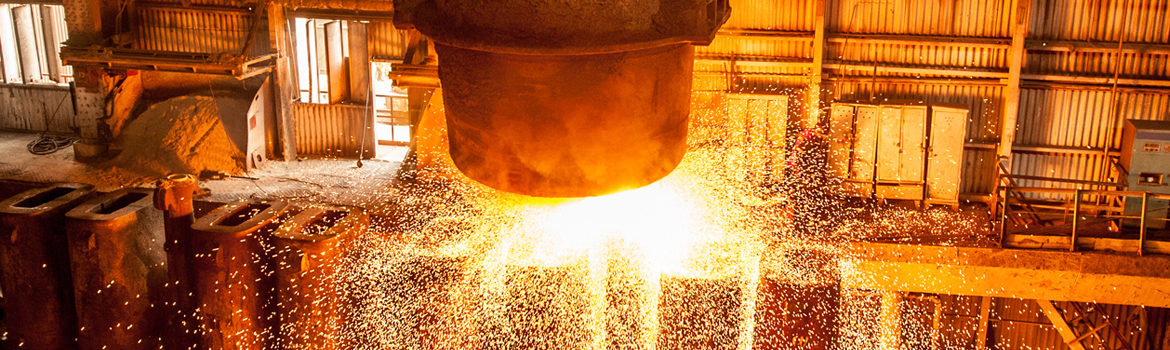
Metal casting, a super–flexible and versatile process, finds a wide range of industrial applications. At VR Foundries, we manufacture parts for anything from automobile, textile, to hydraulic industries through to general engineering industries.While you can find most of the aluminium castings go in the form of ‘as cast’ state, a number of applications need greater… Continue reading Do metal castings need heat treatment?
What are the benefits of end to end manufacturing? Why should you choose VR Foundries?

VR Foundries, with our extensive range of services with the help of state–of–the–art technology and cutting–edge infrastructure, have become an integral part in the manufacturing process of several of our clients. From the initial design, production to the product delivery, we guarantee a complete quality of our delivery and ensure our customer requirements are strictly… Continue reading What are the benefits of end to end manufacturing? Why should you choose VR Foundries?
What are the differences between Die Casting and Machining?

Die casting has been one of the most important manufacturing processes. How many of us realise that almost all components, objects and tools in our day-to-day come out of one form of casting processes or the other. Name anything for that matter —door handles, taps, light fittings, car components, computer components, furniture components or even components… Continue reading What are the differences between Die Casting and Machining?
What are the differences between Malleable Iron & Cast Iron?

A broad range of alloys are available under the name ‘iron’; these alloys are classified according to the percentage of carbon content
Why was cast iron used in architecture?

Cast-iron architecture became mainstream as a building design material all over the world in the mid-1800s. Its popularity can be attributed, in part, to its cost-effectiveness and efficiency — an elegant exterior facade could be mass-produced economically using cast iron. Now, portable iron houses have become very popular as one can prefabricate and ship the… Continue reading Why was cast iron used in architecture?
What are the advantages of Ductile Iron?

Ductile iron castings are quite strong when compared to regular cast iron (grey iron). The tensile strength of ductile iron is between 60,000 psi and 120,000 psi, whereas that of ductile iron castings falls in the range 20,000 – 60,000 psi
Is Cast Iron the best choice for reducing gear noise?
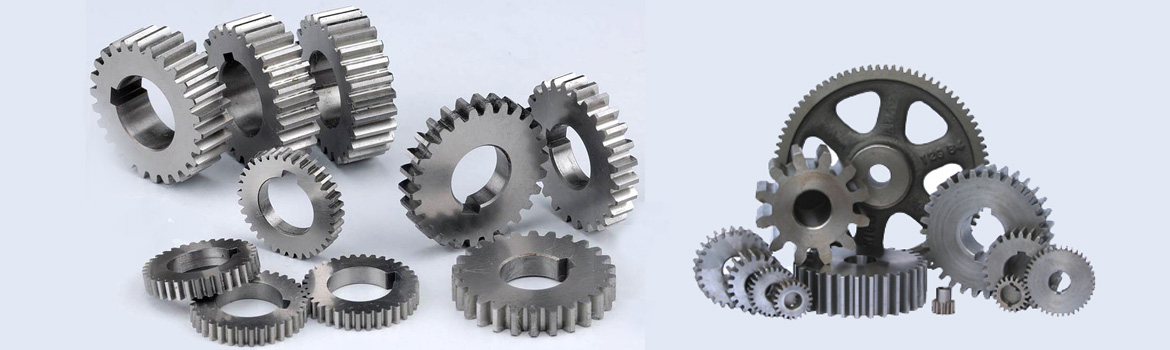
Selection of the right material can play an important role in the reduction of noise. Design engineers either re-design the gear or specify tighter dimensional tolerances in order to reduce noise. But these two methods can only add to the cost of the finished product; not to mention an unsatisfied end user. The only alternative… Continue reading Is Cast Iron the best choice for reducing gear noise?
The History of Ductile Iron | its origins and industrial impact

In Versailles, France, you can find the oldest operating cast iron water main installed in 1664. In North America alone, you can find more than 500 municipalities with cast iron pipes that have been around for close to 100 years